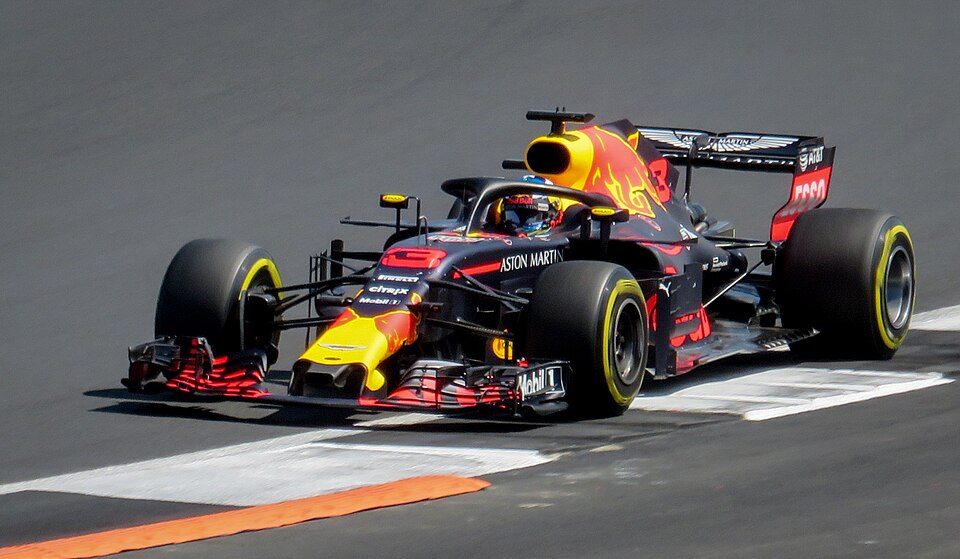
The Red Bull Racing Formula 1 team was founded in 2004, bought off of a struggling Jaguar Racing Team. In early 2000s, F1 was working through financial hardship within smaller teams. Red Bull soon purchased the Jaguar Racing Formula 1 team from Ford for a symbolic purchase price of exactly $1.00. While the upfront cost was extremely low, the purchase came with a massive financial catch. Ford required Red Bull to commit to investing $400 million into the racing team over the following three seasons to keep it alive, and Red Bull had to take on all of the existing liabilities and massive operational debts that Jaguar had accumulated. Two years later, Red Bull owner Dietrich Mateschitz purchased the Minardi racing team in late 2005 for around $35 million. The team was officially rebranded as Scuderia Toro Rosso ahead of the 2006 Formula One season. The purchases were intended to protect grid vitality, and expand Red Bull brand influence in motorsport.
However, no other team in history has functioned in the same way Racing Bulls and Red Bull do. While historically, teams like Benetton and Logier, Mercedes and Williams, and Ferrari and Haas have been linked, they are not owned by the same corporation. This further separates team cooperation, which is harder to regulate in the Red Bull A and B teams. Teams all over the grid do work together, as engine or power unit suppliers have potential leverages over other teams already. For example, in 2026, Mercedes, McLaren, Alpine and Williams operate with Mercedes power units, while Ferrari Cadillac, and Haas use the Ferrari power unit. This allocates limited power to these teams, as the success of the satellite teams are directly dependent on the efficiency of the provided car parts. Formula 1 teams are allowed to share or buy certain car parts from competitors, but strict FIA regulations govern exactly which components can be transferred. Specifically, teams must independently design their own aerodynamic surfaces and chassis. This permits wiggle rooms within the Red Bull sphere, however as the main team can choose to run a more conservative car design, while the sister team can utilize a more experimental design. While the F1 rules dictate that teams owned by the same company must remain separate entities, restricting cross-team communication, it is near impossible to regulate communication. Additionally, teams can infer how a part is working based on appearance, and design similar parts, without direct communication. This allows Red Bulls to access twice as much data and information as competitors, especially during testing sessions, and practice.
Embed from Getty ImagesVisa Cash App Racing Bulls’ team principal, CEO and drivers pose for a photo with their cars new livery on stage during the VCARB season launch
Perhaps the more obvious unfair advantage of double ownership is the “B team,” Racing Bulls, allows for Red Bull to develop rookies, providing them real race experience without sacrificing a more valuable, competitive seat. This provides the main Red Bull team with 2x the amount of drivers to swap around whenever they see fit, allowing for the two best drivers to race in the main team. With other teams not having such a direct pipeline, nor such an easily accessible pool of drivers, it effectively gives Red Bull two times as many seats, despite the scarcity. This also creates an environment where Racing Bulls, despite taking space on the grid, is never reaching for championships, because they don’t want to take opportunities away from the flagship team.
Moreover, although direct on track inter-team calls are forbidden, on several occasions, Toro Rosso/Alpha Tauri/Racing Bulls have made strategic decisions that directly benefited the A team. Historically, this has come through yielding track positions to Red Bull drivers, defending against competitors for the benefit of the main teams, and even taking points off the table for other teams through fastest lap interventions.
Despite this, the FIA has made no statements implying they find issue with the operation of the Red Bull teams.
Now, Red Bull is the 6th most successful F1 team of all time, with 6 Constructors’ titles, and 8 Driver titles, with more to possibly come. On the current grid, Red Bull remains a threatening competitor, often competing for wins. The validity of their success, however, can be up to debate. While in the FIA rule book, Red Bull breaks no rules, their two-team structure is exposed to scrutiny.
Embed from Getty ImagesThe Oracle Red Bull Racing, Visa Cash App Racing Bulls and Ford teams pose for a photo during the Red Bull Racing season launch
 The Race Insider
Leave a comment