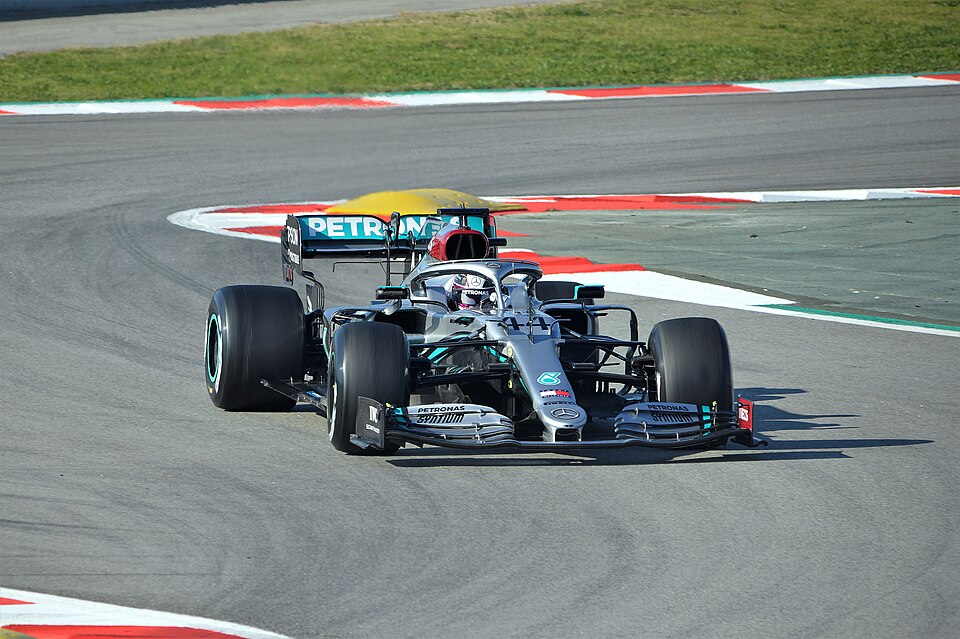
The 2026 season brought a whole new type of racing, that has come to upset fans and drivers alike. The new formula for the cars increased the electric components in the cars, in an attempt to reach sustainability benchmarks. These alterations led to fans complaining that the races turned into energy management competitions as the 2026 power units’ heavy dependence on the hybrid components could not be matched, as batteries haven’t been scaled up to match the power demand. Drivers themselves, especially Red Bull’s Max Verstappen, and one of the largest voices in motorsport right now, have outright expressed their disdain for the new rules. Their main criticism comes from the unnatural dynamics of the car losing power halfway through the straight sections, forcing them to downship to regenerate electrical energy. While European viewership suggests a downward viewership trend, American markets have seen an upshift, and with the introduction of new teams on the grid this year including Audi, many fans had begun to speculate that the electricity-forward regulations were intended to appease automakers, rather to improve on-track racing for fans.
These criticisms were already mounting for the FIA, but the catalyst occurred during the 2026 Japanese Grand Prix, when Haas’ Oliver Bearman suffered a 50G crash that can be credited to the regulations. As Bearman closed in on Alpine’s Franco Colapinto, and activated his overtake boost, Colapinto’s battery entered an energy-harvesting phase. his caused a drastic 50 km/h closing-speed gap, forcing Bearman to veer onto the grass, where he lost control and crashed heavily at the Spoon curve. This moment represented all the problems with the new regulations, and thus, backlash continued.
Embed from Getty ImagesThe damage to the Haas of Oliver Bearman following his crash during the F1 Grand Prix of Japan 2026
As of June 23, 2026, F1 officially agreed to engine rule changes for 2027 and 2028, while offering slight alterations to the rules for the 2026 season. These changes target the output of the combustion engine, the fuel flow, and the deployment of electrical energy. The Internal Combustion Engine (ICE)’s maximum power output will be gradually increased year by year from the current 400 kw to 420, and up to 450 kw by 2028. In addition to this, the fuel flow will be increased by 5% in 2027, and 13% in 2028, overall increasing the workload of the engine. This is reflected in the maximum battery power, which is being reduced from 350 kw to 300 kw. However, 350 kw will still be available for overtake mode. Also, drivers will no longer be forced to lift and coast as often to recharge the battery as the energy harvesting will be increased to 400 kw (2028), from a current 350 kw. Moreover, the combustion and battery split will move from our 53% ICE, 47% Energy Recovery System, to 58/42 in 2027, and 60/40 in 2028.
These changes will allow drivers to push harder without running out of battery, and give teams more flexibility to manage available energy. This will especially effect qualifying as the flat-out format does not play well with the current regulations. However, to accommodate for the difficulty of these cars, preseason testing has been extended from 3 days to 4. The race distances may also have to be shortened as well, and reconnaissance laps might have to be limited. This would save fuel for actual racing, as the updated regulations will require more fuel. This also means that teams will not need to redesign their chassis.
For 2026, the changes come in two parts, both weather related. One modifies the Heat Hazard declaration. Previously, the heat hazard warning (applied when temperatures reach or exceed roughly 31°C) applied to the entire race weekend. The regulation, which calls for mandatory driver cooling systems or additional hydration, can now be split during a race weekend, only covering one event, instead of the entire weekend (sprint + race) when needed. The second change applies to wet weather, where boost mode is now reintroduced, though restricted in wet track conditions. Simultaneously, the overtake function is disabled.
As the regulations continue to progress through “continuous dialogue and collaboration,” it is important to remember that the regulations do not immediately alter the racing, and that the development of regulations does not stop “when the cars first take to the track.” The FIA continues to tweak and oversee the evolution of current and future regulations to ensure they meet the standards of fans, drivers, and Formula One itself.
Embed from Getty ImagesPresident of the FIA, Mohammed bin Sulayem attends the F1 Grand Prix of Monaco 2026
The Race Insider
 The Race Insider
Leave a comment