Ferrari fans, the “Tifosi” cheer on the Italian team at the Grand Prix of Italy, 2016.
Scuderia Ferrari is the oldest and most successful team in Formula 1 history. Having competed in every season since the championship’s inception in 1950, the Italian competitor holds the all-time records for both Constructors’ Championships with 16 wins, and 15 Drivers’ Championships, won by iconic drivers like Alberto Ascari, Niki Lauda, and Michael Schumacher. But how did they get there?
Scuderia Ferrari is the racing portion of Ferrari, an Italian sports car manufacturer. Founded in 1929 by Enzo Ferrari, it allowed him to fund his true passion, motor racing. Originally established as a racing team for Alfa Romeo, Enzo broke away to build his own cars.
Embed from Getty ImagesEnzo Ferrari (left) and Canadian Formula 1 driver Gilles Villeneuve during the unveiling of Ferrari’s new 312 T3 in 1977
Humble Beginnings
Enzo grew up watching mechanics fix engines in his father’s workshop, which fabricated metal parts and railway axles. At age 10, his father took him to the Circuito di Bologna car race. Seeing legendary driver Felice Nazzaro win instantly hooked him, making him dream of becoming a racing driver. World War I disrupted his life. A devastating flu outbreak killed both his father and older brother, forcing the family business to collapse. Enzo served in the Italian Army but fell critically ill and was discharged. Penniless and needing work, he applied at Fiat but was rejected. He eventually landed a job at Costruzioni Meccaniche Nazionali (CMN) as a test driver, helping convert old trucks into passenger cars. Enzo Ferrari made his competitive racing debut on October 5, 1919. Shortly after, in 1920, he joined the Alfa Romeo racing team. He competed in the early 1920s, winning his first Grand Prix at Ravenna in 1923. His racing career saw him win 11 races, before eventually shifting his focus entirely to team management and auto manufacturing.
Backed by Alfa Romeo, Scuderia Ferrari took their first victory in the 1935 German Grand Prix. In 1939, Enzo left Alfa Romeo to start his own company, eventually moving operations to Maranello, Italy, during World War II. Due to contractual agreements, he was prohibited from using the “Ferrari” name for a few years. It wasn’t until 1947 that the first car to be designed and built entirely under the Ferrari name, the 125 S, was released. Enzo viewed building luxury road cars strictly as a means to finance his true love: Formula 1 racing. Then, in 1949, Ferrari won at the 24 hours of Le Mans race, cementing their racing expertise before F1s inaugural season in 1950.
Ferrari’s reputation, however, did not come from nowhere, as Enzo Ferrari, the self-proclaimed “agitator of men” often heavily criticized his own workers and drivers. Famously, Enzo hired more drivers than there were available seats, creating a competitive ecosystem that drove performance. Enzo Ferrari believed that the team came before the driver, winning justified almost any sacrifice, and that drivers were replaceable. This iron-fist style meant that only the best proved good enough for Enzo. This meant that driving for the red team became a badge of honor, only able to be accomplished by excellent drivers.
Another “badge” for Ferrari drivers is the Prancing Horse. The emblem on the Ferrari logo derived from a painted version on a fighter plane. When Enzo met with the parents of the heroic Italian fighter pilot, Francesco Baracca, Count and Countess Baracca insisted that Enzo should put the symbol on his racing car. They suggested that the horse would bring him good luck. Combined with the vibrant yellow associated with his hometown of Modena, Italy, the Ferrari logo was born.
The 1950s
Although Ferrari in the 1950s was very different from the Ferrari fans know today, the team established its legendary status in Formula 1 by securing four Drivers’ World Championships and securing its first-ever Grand Prix victory. Ferrari was still getting it’s footing, and they missed the first championship race in Silverstone. Formula 1 itself was brand new, and racing was often dangerous, unpredictable, and heavily influenced by the personalities of drivers and team owners. After making its debut at the 1950 Monaco Grand Prix, Ferrari spent the decade engaging in intense rivalries with Alfa Romeo, Maserati, and Mercedes-Benz. During this decade, Alberto Ascari emerged as Ferrari’s first superstar. He delivered Ferrari’s first Formula 1 World Championships in 1952 and 1953. Ascari won races with remarkable consistency and precision. During his peak, Ferrari won six consecutive championship races, as the driver and team duo became the ones to beat. Unfortunately, Formula 1 in the 1950s was extraordinarily dangerous. Tracks lined with trees, lack of medical personnel, lack of seatbelts, and more, culminated in a race to the death. Despite knowing this, many drivers continued to race. In 1955, tragedy struck for Ferrari as a testing accident resulted in the death of Ascari. By the end of the 1950s Ferrari had established itself as one of the sport’s elite teams. The team ended the decade with 4 championships, Ascari’s 1952 and ’53 wins, Juan Manuel Fangio’s championship in 1956, and Mike Hawthorn’s Drivers Championship in 1958. Ferrari also became known for producing beautiful red racing cars that helped create the iconic image of the Scuderia.
Embed from Getty ImagesAlberto Ascari during the Grand Prix of France, 1953
The 1960s and 1970s
The 1960s and 1970s transformed Ferrari from a successful racing team into a global Formula 1 legend. It was also one of the most turbulent periods in the team’s history, featuring technological revolutions, championship glory, political drama, and heartbreaking losses. Ferrari’s struggle to adapt to a changing sport resulted in some interesting designs, as the team often seemed caught between tradition and modernization. In 1961, the team introduces the iconic “sharknose” 156 F1 car, helping Phil Hill become the first American World Champion, and giving Ferrari their 5th championship win.
Embed from Getty ImagesPhil Hill drives the Ferrari 156S, 1961
But the championship was overshadowed by tragedy. Ferrari driver Wolfgang von Trips was killed during the Italian Grand Prix while leading the championship. Ferrari initially resisted rear-engine designs, however, the faster Lotus and Cooper cars forced innovation, showing the rear-engine cars were more agile and faster. Enzo Ferrari reportedly dismissed rear-engine cars as unsuitable for “real racing cars,” but eventually, he had no choice but to follow the trend. In 1961, several senior Ferrari managers resigned after disputes with Enzo Ferrari and his wife. This became known as the “Palace Revolt.” The falling out resulted in organizational instability and years of rebuilding after the loss of engineering talent. One of Ferrari’s greatest drivers arrived in the mid-1960s. John Surtees was unique because he became the motorcycle World Champion as well as the Formula 1 World Champion. In 1964 he won the championship with Ferrari, becoming the only person ever to win world championships on both two wheels and four wheels. Following the difficulties in the early 1970s, a young manager named Luca di Montezemolo was brought in to help reorganize Ferrari. He improved team structure, reduced chaos and helped recruit key talent. In 1974 Ferrari hired Niki Lauda. Many thought the signing was strange because Lauda was not considered a superstar. Lauda was brutally honest. His technical knowledge helped transform Ferrari’s cars, and the Ferrari 312T was born. The Ferrari 312T became one of the greatest Formula 1 cars ever built. It was very reliable, and it changed Ferrari’s fortunes. Lauda won the 1975 World Championship and the 1977 World Championship. For many fans, this was Ferrari operating at its absolute peak. In The 1976, Ferrari’s luck had seemingly ran thin. At the German Grand Prix, Lauda crashed, and his car caught on fire. He suffered severe burns in the Nürburgring crash and nearly died. Most expected him to miss the rest of the season. Instead, he returned just six weeks later. His comeback became one of the greatest stories in sports history. Although James Hunt ultimately won the 1976 championship, Lauda’s return became legendary.
Embed from Getty ImagesThe remnants of Niki Lauda’s Ferrari after the accident that nearly cost him his life
The 1980s and 1990s
By the start of the 1980s, Ferrari had evolved into the most famous team in Formula 1, a symbol of passion and prestige. The team was expected to fight for championships every year. The team built some incredibly fast cars and attracted elite drivers, but despite many opportunities, Ferrari failed to win a Drivers’ Championship. Formula 1 entered the turbocharged era, and Ferrari was one of the first teams to fully commit. Ferrari’s 1,000 horsepower cars were notoriously difficult to drive, but their power was feared around the paddock. Enter Gilles Villeneuve: Ferrari’s New Hero. Enzo Ferrari adored him. Villeneuve was famous for his aggressive, fearless driving style. Even today, many Ferrari fans consider him one of the greatest drivers never to win a championship. However, In 1982 Villeneuve was killed during qualifying at Zolder. The loss devastated Ferrari. After Villeneuve’s death, teammate Didier Pironi led the championship. Then, Pironi suffered career-ending injuries. Without either one of their drivers, the championship slipped away. Yet Ferrari still won the Constructors’ Championship. In 1985, Michele Alboreto nearly delivered Ferrari’s first Drivers’ Championship since Lauda. Mid-season, Ferrari looked dominant and Alboreto led the standings. Then reliability collapsed and mechanical failures destroyed the campaign. The title went to Alain Prost and McLaren. Throughout the 1980s, Enzo Ferrari remained a towering presence. By this point he was viewed almost like royalty within motorsport. When Enzo Ferrari died in 1988 at age 90, Formula 1 lost one of it’s founders, ending an era. Only weeks after Enzo’s death, Ferrari scored an emotional 1-2 finish at Monza, despite McLaren having been nearly unbeatable all year. The victory felt like a tribute to the founder himself. In the early 1990s, Ferrari attracted superstar drivers, such as Alain Prost, Nigel Mansell and Gerhard Berger. However, the team still struggled with internal politics, and reliability. In 1990, Alain Prost nearly won the championship. He pushed Ayrton Senna all the way to the final races, but The season ended with the infamous Senna-Prost collision at Suzuka. Ferrari lost the title, the team’s closest championship challenge for years. In the mid 1990s, Ferrari became known for having great drivers, passionate fans, and fast engines, but rarely the best overall package. While Ferrari kept making costly mistakes, Williams and McLaren dominated as the tifosi grew frustrated. Everything changed in 1996. Michael Schumacher shocked the sport by leaving championship-winning Benetton for Ferrari. At the time many thought it was a mistake because Ferrari had not won a Drivers’ Championship since 1979. Schumacher wasn’t just joining to drive, though. He wanted to rebuild Ferrari. Soon Ferrari had assembled a dream team of Michael Schumacher, Ross Brawn, Rory Byrne and Jean Todt. This group would eventually dominate Formula 1. In 1996, Schumacher’s wet-weather victory in Spain became legendary. The Ferrari was nowhere near the best car, yet Schumacher won by over 45 seconds. Again in 1997 and 1998, Ferrari still wasn’t the fastest team. McLaren and Williams often had superior cars, but Schumacher dragged Ferrari into championship battles. Fans began believing again as the famous team was no longer merely for show. The prancing horses were becoming competitive again. In 1999, Ferrari won the Constructors’ Championship, their first Constructors’ title since 1983. Although Schumacher missed part of the season due to a broken leg, Ferrari showed it was finally ready to challenge consistently. The foundation for the dominant 2000s had been built.
Embed from Getty ImagesPortrait of Ferrari driver Michael Schumacher before the Formula One Malaysian Grand Prix, 2002
The 2000s to Present
By the start of the 2000 season, Ferrari had spent more than two decades waiting for a Drivers’ Championship. The team had come close with Alain Prost, struggled through the wilderness years of the early 1990s, and slowly rebuilt itself around Michael Schumacher, Jean Todt, Ross Brawn, and Rory Byrne. What followed would become one of the greatest dynasties in the history of sport. The 2000 season marked the end of Ferrari’s long championship drought. Michael Schumacher defeated Mika Häkkinen and McLaren to claim Ferrari’s first Drivers’ Championship since Jody Scheckter in 1979. The victory was emotional for Ferrari fans around the world. After years of frustration, the Scuderia was finally back on top. What followed was unprecedented. Schumacher won five consecutive championships from 2000 through 2004. Ferrari secured Constructors’ Championships year after year, and the team became the model for excellence in Formula 1. The Ferrari F2002 and F2004 are often cited among the greatest Formula 1 cars ever built. During this era, Ferrari rarely made mistakes. The team seemed almost invincible. In 2005, Formula 1 regulations changed, disrupting Ferrari’s dominance. Renault and a young Fernando Alonso emerged as the new force in Formula 1. Schumacher and Ferrari suddenly found themselves chasing rather than leading. Ferrari recovered somewhat in 2006, mounting a serious championship challenge against Alonso. The battle lasted until the final races of the season, but Alonso ultimately secured the title. At the end of 2006, Schumacher announced his retirement. For many Ferrari fans, it felt like the closing chapter of the team’s greatest era. Following Schumacher’s departure, Ferrari signed Kimi Räikkönen. The 2007 season produced one of the most dramatic championship fights in Formula 1 history. Entering the final race, three drivers still had a realistic chance of becoming World Champion. Against the odds, Räikkönen won the race and secured the championship by a single point. To this day, Kimi Räikkönen remains Ferrari’s most recent Drivers’ World Champion.
Embed from Getty ImagesKimi Raikkonen holds up the winner’s trophy after the Chinese Grand Prix at the Shanghai International Circuit, 2007
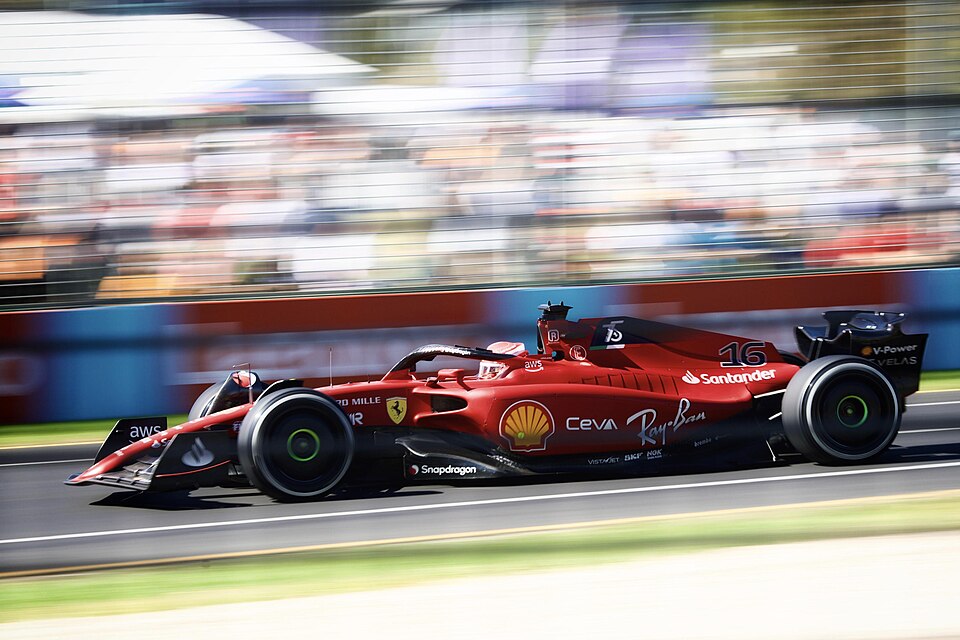
At the time, few people imagined it would become such a significant statistic. Ferrari won the Constructors’ Championship in 2008 but narrowly lost the Drivers’ Championship when Lewis Hamilton passed Timo Glock on the final lap of the final race. The moment remains one of the most dramatic endings in Formula 1 history. Fernando Alonso joined Ferrari in 2010 and immediately transformed the team into championship contenders. Alonso came heartbreakingly close to winning titles in 2010 and 2012. Many fans consider Alonso’s 2012 season one of the greatest driving performances ever. Ferrari’s car was often slower than its rivals, yet Alonso carried the championship fight to the final race. Twice Ferrari stood on the edge of returning to the top, and twice the championship slipped away. When Sebastian Vettel joined Ferrari, many believed history was repeating itself. Like Schumacher before him, Vettel arrived as a multiple World Champion. He openly spoke about his dream of winning with Ferrari. The partnership began promisingly, and by 2017 and 2018 Ferrari had produced cars capable of challenging Mercedes. For the first time in years, Ferrari appeared to have both the driver and machinery needed to win a championship. Yet mistakes accumulated. Meanwhile, Mercedes and Lewis Hamilton operated with remarkable consistency. Ferrari repeatedly found ways to lose positions that should have strengthened their title campaigns. By 2019 the dream was fading. The arrival of Charles Leclerc signaled the beginning of a new generation. Charles Leclerc quickly became one of Ferrari’s brightest stars. Young, incredibly fast, and deeply emotional about driving for Ferrari, he embodied many of the qualities fans admired most. His victories at Spa and Monza in 2019 instantly elevated him to hero status among the tifosi. The Monza victory was especially significant. Ferrari fans packed the grandstands as Leclerc delivered Ferrari’s first Italian Grand Prix victory in years. For a moment, it felt as though a new era had arrived. However, the 2020 season proved disastrous. Following regulatory scrutiny of Ferrari’s engine performance, the team suffered a dramatic loss of competitiveness. The cars were slow by Ferrari standards, and victories and championship ambitions vanished. Yet the difficult season forced Ferrari to rethink its approach and begin rebuilding once again. Formula 1 introduced major technical regulations in 2022. Ferrari started strongly. Charles Leclerc won races and briefly led the championship. For several months, Ferrari appeared capable of ending its long title drought. However, a familiar pattern of mistakes and reliability problems emerged. Red Bull and Max Verstappen gradually pulled away. The same story repeated itself in 2023 and 2024. Ferrari remained competitive, often capable of winning races, but rarely capable of sustaining a championship challenge across an entire season. The team still possessed speed, but not consistency. One of the most shocking announcements in modern Formula 1 came when Lewis Hamilton agreed to join Ferrari. The move immediately became one of the most anticipated partnerships in the sport’s history. Hamilton is one of Formula 1’s most successful drivers and Ferrari is Formula 1’s most famous team. The possibility of combining those two legacies captured the imagination of fans around the world. For Ferrari supporters, the question became obvious: Could Hamilton accomplish what Alonso, Vettel, and Leclerc had not? Modern Ferrari exists in a strange position. The team remains the most famous name in Formula 1. It possesses unmatched history, the largest fanbase in the sport and unlimited passion. Yet, Ferrari also carries enormous expectations.
Embed from Getty ImagesCharles Leclerc and Lewis Hamilton of Scuderia Ferrari during the Monaco Grand Prix, 2026
Every season begins with championship hopes, and every defeat feels magnified. Unlike many teams, Ferrari is judged not by whether it wins races, but by whether it wins championships. That pressure has defined Ferrari for decades, starting from the very way Enzo himself dictated his team. Today, Ferrari remains Formula 1’s most romantic team, a symbol of ambition, prestige, and passion. It has experienced dominance, heartbreak, redemption, and disappointment. Through every era, one thing has remained constant: the belief that the next great Ferrari championship is always just around the corner.Whether that championship arrives with Charles Leclerc, Lewis Hamilton, or another future star remains one of the most compelling stories in Formula 1.
Races to Watch
Here are 10 Ferrari races that basically tell the story of the team.
- 1961 Italian Grand Prix (Monza)
- Why watch it:
- Ferrari wins the championship with Phil Hill, but the race is overshadowed by the tragic death of Wolfgang von Trips, who was leading the title fight.
- Why watch it:
- 1964 Mexican Grand Prix
- Why watch it:
- John Surtees wins Ferrari the Drivers’ Championship in one of the closest title fights of the decade, becoming the only world champion on two wheels and four wheels.
- Why watch it:
- 1975 Italian Grand Prix (Monza)
- Why watch it:
- Niki Lauda clinches the title at Ferrari’s home race. This is the start of Ferrari’s modern structured success era.
- Why watch it:
- 1976 German Grand Prix (Nürburgring)
- Why watch it:
- Lauda’s near-fatal crash and survival. Arguably the most famous Ferrari-linked moment in history.
- Why watch it:
- 1982 Monaco Grand Prix
- Why watch it:
- Villeneuve’s final victory in chaotic wet conditions, driving flat-out like only he could.
- Why watch it:
- 1988 Italian Grand Prix (Monza)
- Why watch it:
- Ferrari finishes 1–2 just weeks after Enzo Ferrari dies. McLaren had dominated all season, yet Ferrari wins at Monza.
- Why watch it:
- 1996 Spanish Grand Prix
- Why watch it:
- Schumacher’s first Ferrari win, in heavy rain, he destroys the field in a slow car.
- Why watch it:
- 2000 Japanese Grand Prix (Suzuka)
- Why watch it:
- Ferrari ends a 21-year championship drought. Schumacher wins the title after a tense battle with Häkkinen.
- Why watch it:
- 2008 Brazilian Grand Prix (Interlagos)
- Why watch it:
- One of the most heartbreaking races in Ferrari history. Felipe Massa wins the race and he thinks he is champion for 30 seconds. Then Hamilton passes Glock in the final corner of the final lap and Ferrari loses the title by a single point.
- Why watch it:
- 2019 Italian Grand Prix (Monza)
- Why watch it:
- Leclerc wins at Monza, Ferrari’s first home victory in years.
- Why watch it:
 The Race Insider
Leave a comment