Driving in Formula 1 is a massive, impressive life-defining feat. However, looking back through the modern era, several drivers are frequently ranked as the least suited for the sport. While the title of the “worst” Formula 1 driver is subjective, historical consensus heavily points to a set few drivers, who earn widespread criticism from fans.
Yuji Ide
Yuji Ide’s stint in Formula 1 remains one of the shortest and most chaotic in modern history. Entering the sport in 2006 with the newly formed Super Aguri team, Ide was drastically unprepared for the pinnacle of motorsport. At 31 years old, he spoke very little English, which severely hampered his ability to communicate with his engineers and adapt to the complex machinery. His lack of preparation was immediately evident on track, where he lagged seconds behind his experienced teammate, Takuma Sato, and frequently spun out during practice sessions.The turning point of his brief F1 career occurred at the 2006 San Marino Grand Prix. On the opening lap, Ide attempted a reckless overtaking maneuver on Christijan Albers. The resulting collision sent Albers’ car into a spectacular, terrifying barrel roll into the gravel trap. While Albers was fortunately unhurt, the governing body had seen enough. Ide was strongly advised by the FIA to gain more experience before racing in F1 again, and he was promptly dropped by Super Aguri after just four Grands Prix. The ultimate humiliation came shortly after his dismissal when the FIA officially revoked Ide’s Super License.
Embed from Getty ImagesThis extreme measure is incredibly rare in Formula 1 and served as a formal declaration that his driving posed a legitimate safety hazard to the rest of the grid. Ide returned to racing in Japan, finding decent success in Super GT, but his name remains permanently etched in F1 lore as a cautionary tale of promoting a driver far too quickly into a seat they cannot handle.
Embed from Getty ImagesMahaveer Raghunathan
Mahaveer Raghunathan is unique on this list because he never actually started an official Formula 1 Grand Prix. However, his reputation among F1 fans and insiders earned him legendary status for all the wrong reasons during his 2019 FIA Formula 2 campaign. Driving for MP Motorsport, Raghunathan was consistently, inexplicably off the pace, often qualifying multiple seconds behind the rest of the grid. His lack of situational awareness and basic car control made him a constant talking point on race weekends.
Embed from Getty ImagesRaghunathan’s most famous achievement was his ability to accumulate penalty points at an unprecedented rate. In just the first half of the 2019 season, he managed to rack up 12 penalty points, triggering an automatic one-race ban. His offenses ranged from failing to slow down under yellow flags to repeatedly exceeding track limits and even passing the checkered flag twice at the end of a race. Remarkably, after serving his ban, he returned and accumulated yet another nine penalty points before the season concluded. Beyond the official penalties, Raghunathan became an internet sensation for his agonizingly slow three-point turns after spinning into run-off areas. While he did manage to score a solitary championship point at Monza due to high attrition, his performances became a meme within the motorsport community. His career serves as a stark reminder of the massive gap in talent that can exist when financial backing overrides merit in the junior formulas leading up to F1.
Luca Badoer
Luca Badoer’s legacy in Formula 1 is deeply tragic because he was actually a highly talented and respected driver. For years, Badoer served as Ferrari’s primary test driver during their golden era with Michael Schumacher, logging thousands of flawless miles to help develop championship-winning cars. However, his race record tells a completely different story. Badoer holds the unenviable F1 record for the most race starts (50) without scoring a single world championship point.The rock-bottom of his career came in 2009, a decade after his last full F1 season. Following a severe head injury to Felipe Massa, Ferrari surprisingly called the 38-year-old Badoer out of racing retirement to fill the seat. It was a romantic narrative that quickly turned into a sporting nightmare. The sport had drastically changed, testing was heavily restricted, and Badoer looked utterly lost in the Ferrari F60. At the European Grand Prix in Valencia, he qualified dead last, crossed the pit exit line four times during practice, and finished a lap behind the leaders. His second and final race with Ferrari at Spa-Francorchamps was no better. While his teammate Kimi Räikkönen won the race, Badoer finished last once again. The Italian media was brutal, mockingly labeling him “Look-a Bad-er.” Ferrari dropped him immediately after for Giancarlo Fisichella. Badoer was a victim of circumstance, thrown into a high-pressure environment without modern preparation, forever altering how fans remember an otherwise dedicated servant to the Scuderia.
Embed from Getty ImagesTaki Inoue
Taki Inoue is widely regarded as one of the ultimate “pay-drivers” of the 1990s, a title he wears today with immense pride and self-deprecating humor. Securing a seat with the cash-strapped Footwork Arrows team for the 1995 season, Inoue brought substantial Japanese sponsorship money but very little competitive edge. Throughout the year, he was routinely out-qualified by his teammate Gianni Morbidelli by margins of two to three seconds, making him an obstacle during races. Inoue’s F1 career is defined by two bizarre incidents involving safety cars rather than any racing achievement. At the 1995 Monaco Grand Prix, his stalled car was being towed back to the pits on a rope when the safety car, driven by Jean Ragnotti, slammed into it. The impact flipped Inoue’s car upside down, though he escaped serious injury because he was still wearing his helmet.The absurdity escalated later that year at the Hungarian Grand Prix. After his engine caught fire, Inoue hopped out of the cockpit and ran to grab a fire extinguisher from a track marshal. As he turned back toward his smoking car, he walked directly into the path of an approaching medical car. The car struck him, flipping him over the hood onto the grass. Inoue survived with minor leg injuries, and his hilarious bad luck solidified his status as F1’s ultimate comic-relief figure.
Embed from Getty ImagesNikita Mazepin
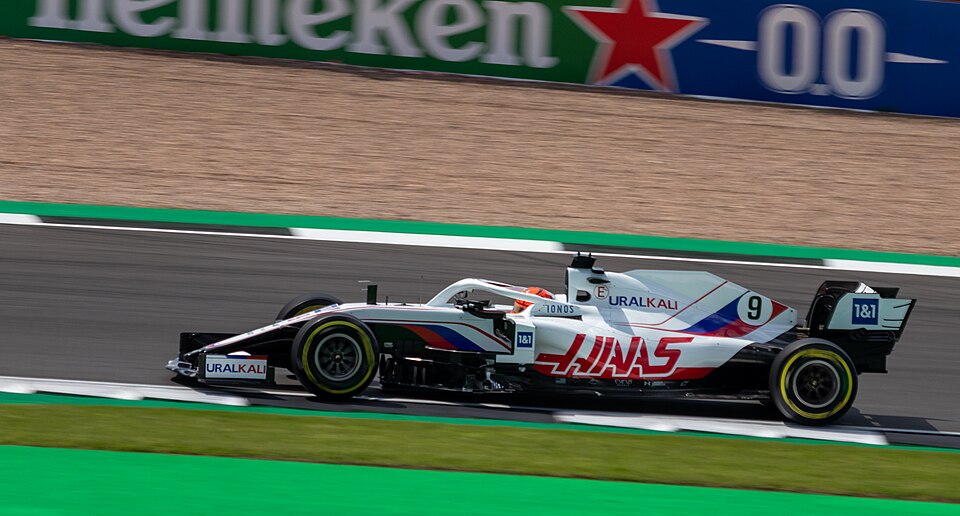
Nikita Mazepin entered Formula 1 in 2021 with the Haas F1 Team under a heavy cloud of controversy. Backed by his billionaire father’s chemical company, Uralkali, the Russian driver’s arrival was met with intense public backlash due to a highly publicized off-track behavioral incident in which he inappropriately touched a woman. Once on the track, things did not improve. Mazepin struggled immensely with the twitchy, uncompetitive Haas VF-21, earning the mocking nickname “Mazespin” from fans after spinning out repeatedly in winter testing and practice sessions. His debut at the 2021 Bahrain Grand Prix was an unmitigated disaster. Mazepin spun on his very first lap of qualifying, violating an unwritten drivers’ agreement by overtaking cars in the queue. On race day, his grand prix lasted a mere three corners before he lost control on his own, crashed heavily into the barriers, and brought out the safety car. This set the tone for a brutal rookie season where he was comprehensively out-qualified and out-raced by his teammate, Mick Schumacher, at almost every event. Mazepin’s driving style also alienated his peers on the grid. He was frequently criticized for aggressive defensive moves, blocking faster cars under blue flags, and nearly pushing his own teammate into the pit wall at Baku. His F1 career came to an abrupt, unceremonious end prior to the 2022 season. Following the Russian invasion of Ukraine, Haas terminated their title sponsorship with Uralkali and dropped Mazepin immediately, leaving him with a career-best finish of just 14th place.
Embed from Getty ImagesNicholas Latifi
Nicholas Latifi, ironically nicknamed “Goatifi” by internet users, spent three seasons with Williams Racing from 2020 to 2022. Like many on this list, Latifi was a pay-driver whose wealthy father provided crucial financial stability to a legendary team going through a severe economic crisis. While Latifi was generally well-liked in the paddock for his polite demeanor and professionalism, he lacked the ultimate raw pace required to compete at the front of the grid. Latifi’s career will forever be defined by a single accident at the 2021 Abu Dhabi Grand Prix. While battling Mick Schumacher at the back of the field, Latifi crashed into the wall with just a few laps remaining. The resulting safety car completely disrupted the race, leading to a highly controversial restart that allowed Max Verstappen to overtake Lewis Hamilton for the world championship.
Embed from Getty ImagesIn the aftermath, Latifi faced an avalanche of horrific online abuse and death threats from angry fans, a dark chapter that he handled with immense dignity. Despite scoring occasional points, Latifi could not escape the shadow of his mistakes. In 2022, he was thoroughly outperformed by Alex Albon and was even beaten by a debuting Nyck de Vries in identical machinery at Monza. Williams opted not to renew his contract at the end of 2022. Latifi subsequently walked away from motorsport entirely to pursue an MBA, leaving F1 with a reputation as a nice guy who was simply out of his depth.
Embed from Getty ImagesDespite their shortcomings, some of these drivers were just unlucky, or under prepared, their labeling as “bad drivers” being stuck on unfairly. While bad drivers can pose safety risks, their added entertainment value, and sponsorship money contributes to Formula 1 both in front of the cameras, and behind the scenes.
 The Race Insider
Leave a comment