The Push
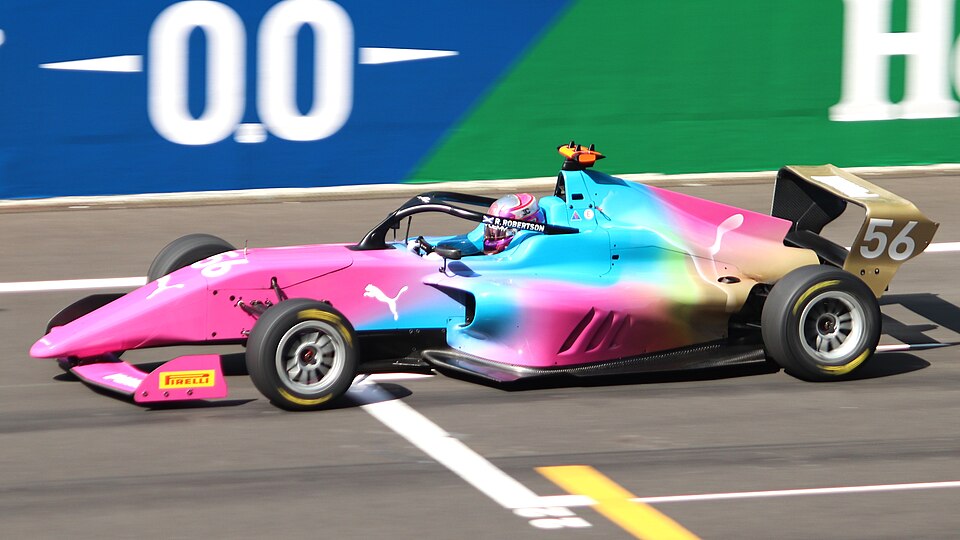
As programs like the all-female F1 Academy are gaining popularity, how likely are we to see a female driver race in the pinnacle of motor sport? With new initiatives specifically designed to develop female talent and create a stronger pipeline into higher formulas, is the idea of female Formula One drivers something we should all be sitting on the edge of our seats for?
Embed from Getty ImagesAnd that’s 0.5 points for womankind
Women have technically participated in Formula 1, since the 1950s. Maria Teresa de Filippis, who raced in 3 Grand Prix under Behra-Porsche was the first woman to do so. Her best finish was P10, however, due to the points system that only awarded the top five finishers (and fastest lap), she withdrew from Formula 1 without any points.
Lella Lombardi is considered the most successful woman to have ever raced in an F1 Grand Prix (Granted, there has only ever been 5 total). And how successful, you ask? Lombardi walked away from the 1975 Spanish Grand Prix with a whopping 0.5 points. The race was stopped on lap 29 following a fatal accident, and because less than three-quarters of the planned distance was completed, only half points were awarded to the top finishers, making her the only woman to score in F1 history. Under the regulations of the time, since the race did not reach full distance, half points were awarded (6th place normally earns 1 point, so she received 0.5).
In a more modern scope, Susie Wolff was the test driver for Williams, and participated in practice sessions from 2012–2015 before retiring. She also founded F1 Academy, a female single-seater series, inspiring young women globally, proving that a future in professional motorsport is genuinely within their reach.
The Issues
The primary reason is that very few girls start karting at a young age, resulting in a tiny percentage of female participants in youth motorsport. The sport has historically been male-dominated, which has contributed to a lack of female role models and resources, and a perception of the sport as a male preserve.
Additionally, Motorsport is incredibly expensive, and potential female drivers often struggle to find the same level of sponsorship opportunities as their male counterparts. Securing necessary funding and sponsorship to progress through junior formulas to F1 is difficult for all drivers, but potentially more challenging for women in a male-dominated sport. The path to F1 requires steering very young and staying with a consistent, expensive progression through formula racing. This struggle prevents them from gain necessary funding and track/testing time to progress, resulting in many leaving the sport within one to five years, compared to over 10 years for men.
F1 drivers experience extreme G-forces in the car, so high, they are comparable to fighter pilots. While not impossible for women, the intense neck and upper body strength required, and heavy steering inputs in higher-level formulas, physical demand currently acts as a barrier. Also, a majority of the safety equipment is designed around males as a default.
Even though these challenges aren’t insurmountable, sexism remains a large setback. Women often face doubts about their technical skills, with some being treated as “models” rather than drivers, and experience high rates of verbal harassment, with 54.5% of individuals surveyed having experienced it. Furthermore, Reports indicate incidents of sexual harassment and condescending behavior, sometimes perpetuated by those in power.
Embed from Getty ImagesConclusion
Despite the fact that women make up less than 10% of participants, and only 6% of engineers at Red Bull are women, the ultimate goal of initiatives like F1 Academy is to identify and develop female talent to make the jump into the top tier of motorsport. Increased visibility of female drivers, engineers, and presenters is challenging stereotypes, supported by figures like Susie Wolff and Lewis Hamilton.
So maybe, with the success of F1 Academy and further investment in women advancing in motorsport, fans will soon be able to cheer on a new, history-making driver.
 The Race Insider
Leave a comment